
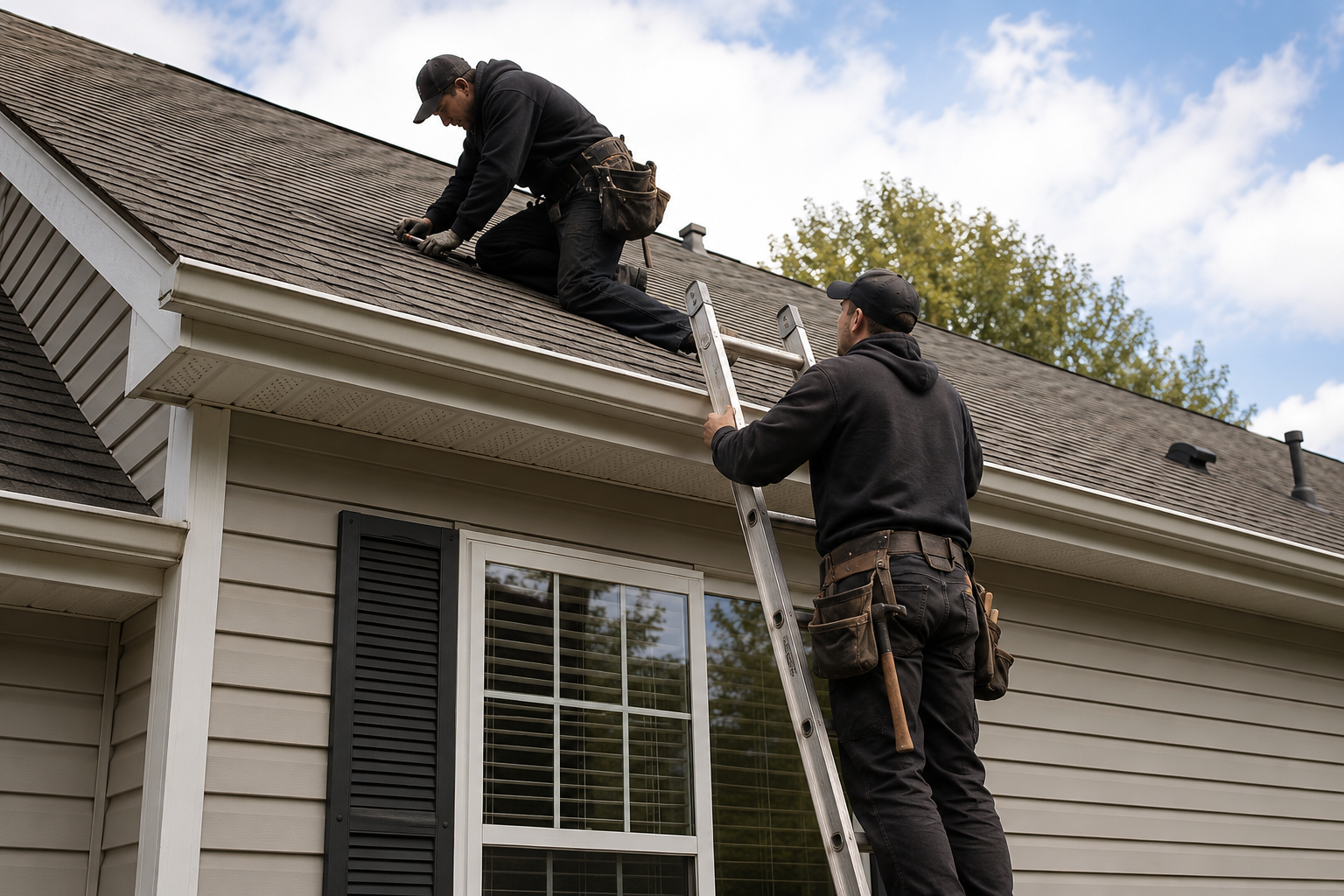
Many homeowners regret skipping a few key questions before signing a roofing contract. Before you hire roofers in Orland Park, you need to know what separates a qualified roofer from a risky gamble.
Key Takeaways:
- A roofer’s Illinois license number and proof of workers’ compensation coverage should be confirmed directly with the issuing agency, not just taken from a business card or website claim.
- Local reputation carries more weight than national advertising; a contractor who has completed roofs on homes in your Orland Park subdivision will understand HOA rules, permit offices, and weather patterns specific to Cook County.
- A written estimate should separate labor costs, material brands, and warranty terms line by line, so homeowners can compare bids on equal footing rather than guessing what’s included.
Assessing Insurance and Liability Coverage
Proof of Workers’ Compensation and General Liability
Ask any roofing company operating in Orland Park to provide certificates of insurance directly from their carrier, not a photocopy that could be outdated. Workers’ compensation protects you from covering medical bills if a laborer gets hurt on your property, while general liability covers damage caused by the crew’s negligence.
Contact the insurance provider listed on the certificate to confirm the policy remains active. Some contractors let coverage lapse between jobs, leaving homeowners exposed to claims they never anticipated.
Protection Against Property Damage During Construction
Falling debris, damaged gutters, or crushed landscaping happen more often than most homeowners expect during a reroofing project. A contractor’s liability policy should specifically address these scenarios, covering repairs to siding, windows, or driveways affected by dropped materials or heavy equipment.
Request the policy limits in writing before signing anything. A $300,000 liability cap might sound sufficient until a fallen ladder cracks a windshield or a nail gun malfunction sparks a small fire near your attic insulation.
Orland Park’s older neighborhoods often feature mature trees and tight lot lines, increasing the odds that dumpsters, ladders, or shingle bundles brush against fences or neighboring structures. Ask whether the roofer’s policy extends to third-party property, since damage to a neighbor’s fence or car could otherwise become your responsibility if the contractor’s coverage falls short. Confirming these details upfront, rather than after a mishap, keeps disputes from escalating into costly legal battles.

Evaluating Local Experience and Reputation
History of Successful Projects in the Chicagoland Area
Orland Park homes face lake effect snow, hail, and summer humidity that wear down roofing materials differently than in drier climates. Ask candidates how many years they’ve worked specifically in Cook County and neighboring suburbs like Tinley Park or Orland Hills. A contractor familiar with local building codes and permit offices tends to avoid delays that out of town crews often encounter.
Longevity matters, but so does volume. Companies that have completed hundreds of roofs across Chicagoland typically have refined their crews’ techniques through repeated exposure to regional weather damage. Ask for a rough count of completed projects within a twenty mile radius over the past five years.
Verifiable References and Local Portfolio Review
Photos alone don’t tell the full story. Request contact information for at least three recent clients in Orland Park or nearby communities, then actually call them. Ask about cleanup habits, punctuality, and whether the finished product matched what was promised during the sales pitch.
Portfolios should include addresses you can drive by, not just stock images pulled from manufacturer websites. A contractor confident in their work will happily point you toward finished homes visible from the street.
Digging deeper into references means asking pointed questions beyond “were you satisfied.” Inquire whether the crew stuck to the original timeline, how they handled unexpected issues like rotted decking discovered mid tear off, and whether final costs matched the initial estimate. Check online review platforms for patterns rather than isolated complaints, since a single bad review among hundreds carries less weight than repeated mentions of missed appointments or poor communication. Cross reference the addresses in their portfolio with county property records when possible, confirming the work was permitted and inspected properly rather than done informally without oversight.
Detailing the Project Scope and Material Quality
Shingle Grade and Underlayment Specifications for Illinois Weather
Ask your contractor to specify the exact shingle grade they plan to install, since architectural shingles rated for wind resistance perform far better against Orland Park’s spring storms than basic three-tab options. Get the manufacturer name and product line in writing rather than accepting vague terms like “quality shingles.”
Underlayment matters just as much as the shingles themselves. Synthetic underlayment paired with an ice and water shield along eaves and valleys protects against the freeze thaw cycles common to Illinois winters, so confirm which materials will be used in those vulnerable areas before work begins.
Project Timelines and Daily Cleanup Protocols
Weather windows in Illinois can be narrow, so pin down a realistic start date and completion estimate before signing anything. Contractors juggling multiple jobs sometimes stretch timelines unexpectedly, leaving your home exposed to the elements longer than necessary.
Debris management deserves equal attention. Nails, torn shingles, and loose granules left behind pose real hazards to children, pets, and vehicle tires, so ask how cleanup will be handled each day rather than only at project completion.
Magnetic sweeps for stray nails, tarps placed around landscaping, and dumpster placement plans all signal a contractor who takes daily site management seriously. Homeowners in established neighborhoods near 143rd Street or Crystal Tree often deal with tight driveways and shared property lines, making dumpster placement and debris containment especially important discussion points before work starts.
Understanding Workmanship and Manufacturer Warranties
Differentiation Between Labor and Material Coverage
Ask your roofer to explain exactly what their workmanship warranty covers versus what the shingle or material manufacturer guarantees. A contractor’s warranty typically protects against installation errors, while manufacturer coverage addresses defects in the shingles, underlayment, or flashing itself. Orland Park homeowners should request written copies of both documents before signing anything.
Duration matters too. Some roofers offer a two-year labor warranty, while manufacturers like GAF or CertainTeed may extend material coverage for decades under certified installer programs. Confirm whether your contractor holds that certification status.
Procedures for Addressing Post-Installation Concerns
Find out who you call first if a leak appears six months after installation. Reputable roofers provide a direct contact number and a stated response window, often within 24 to 48 hours, rather than routing you through a general office line.
Documentation matters heavily here. Request that any inspection findings, repair timelines, and follow-up visits get logged in writing, protecting you if disputes arise later regarding warranty obligations.
Local roofing companies serving Orland Park should also clarify whether they handle warranty claims directly with manufacturers or require homeowners to file paperwork themselves. Some contractors manage the entire claims process, submitting photos and inspection reports on your behalf, while others simply hand you a phone number and leave you to negotiate. Knowing this distinction upfront saves considerable frustration if a defect surfaces years down the road, particularly since manufacturer claims often involve strict deadlines and specific documentation requirements that can be easy to miss without professional guidance.
Clarifying Financial Terms and Contractual Obligations
Money matters deserve the same scrutiny you apply to shingles and warranties. Orland Park homeowners often get burned not by shoddy workmanship but by vague contracts that leave payment terms open to interpretation. Ask your roofer to spell out every dollar amount, due date, and condition for release of funds before you sign anything. A contractor who hesitates to put financial terms in writing is signaling a problem you don’t want to inherit.
Structured Payment Schedules and Deposit Requirements
Deposits should reflect a small fraction of the total project cost, typically enough to cover initial material orders rather than the bulk of labor. Illinois contractors who demand half or more upfront before work begins warrant extra questions. Ask how the remaining balance breaks down across milestones like tear off, dry in, and final inspection.
Payment schedules tied to completed stages protect you if a crew stalls midway through your roof. Request specifics on what triggers each installment so you’re not paying for work that hasn’t happened yet.
Importance of Written Estimates and Lien Waivers
Verbal quotes mean nothing once a dispute arises. Insist on a written estimate that itemizes labor, materials, permits, and disposal fees separately. Ask whether the roofer provides lien waivers upon final payment, since unpaid subcontractors or suppliers can otherwise place a lien against your property even after you’ve paid in full.
Lien waivers protect homeowners from double payment situations that catch many people off guard. Request a conditional waiver tied to payment clearing and a final unconditional waiver once funds settle, keeping your property title clean.
Cook County property records show lien disputes tend to surface months after roofing work wraps up, often when a homeowner tries to sell or refinance. Suppliers and subcontractors who went unpaid by the general contractor can file claims directly against your property, regardless of your payment history with the roofer. Request lien waivers in writing for every material supplier and subcontractor involved, not just the primary contractor’s own waiver. Title companies routinely flag unresolved liens during real estate transactions, so resolving this paperwork immediately after project completion saves considerable headache later.
To wrap up
Hiring a roofer in Orland Park comes down to the questions you ask before signing anything. Licensing, insurance, local reputation, material specifics, warranty terms, and payment structure each reveal something about how a contractor operates. Skipping any of these checks leaves you exposed to shoddy work, voided warranties, or unexpected costs once winter storms or summer hail arrive.
Treat your roof as a long term investment tied to your home’s value and safety. A contractor willing to answer every question thoroughly, provide documentation, and explain warranty coverage in plain terms is one worth trusting. Take your time, compare responses across several bids, and choose the roofer whose transparency matches the quality you expect.
FAQ
Q: How can I confirm a roofer’s license is valid for work in Orland Park?
A: Illinois requires roofing contractors to hold a state license issued by the Illinois Department of Financial and Professional Regulation. Ask the contractor for their license number directly, then check that number against the state’s online licensing lookup tool to confirm it’s active and not expired or suspended. A legitimate roofer will provide this number without hesitation and often lists it on business cards, invoices, or their website footer. Beyond the state license, ask whether they’ve pulled permits for jobs in Orland Park before, since local familiarity with the village’s permitting office often means fewer delays once work begins.
Q: What’s the difference between a roofer’s liability insurance and workers’ compensation coverage, and why do I need proof of both?
A: Liability insurance covers damage to your property, such as a shingle crashing through a window or a ladder scratching your siding during the job. Workers’ compensation covers medical costs if a crew member gets injured while working on your roof. Without proof of the second policy, a homeowner in Orland Park could potentially be held financially responsible for an injured worker’s medical bills if that worker sues after an accident on the property. Request a certificate of insurance directly from the insurance carrier rather than accepting a photocopy from the contractor, since certificates can be altered or outdated, and call the carrier to verify the policy is current before signing any contract.
Q: Should I choose a roofer based on the lowest bid, or does that signal a problem?
A: A bid significantly lower than others you’ve collected often points to corners being cut, whether that’s substandard underlayment, fewer roofing nails per shingle, or a subcontracted crew with less experience. Compare at least three written estimates from Orland Park area roofers and look closely at what each includes, such as tear off of the old roof, disposal fees, ice and water shield installation along eaves, and ventilation upgrades. One contractor’s $9,000 quote might exclude debris removal while another’s $10,500 quote includes it, making the higher bid the better value once all factors are weighed. Ask each roofer to itemize labor and materials separately so the numbers can be compared line by line rather than as one lump figure.
