
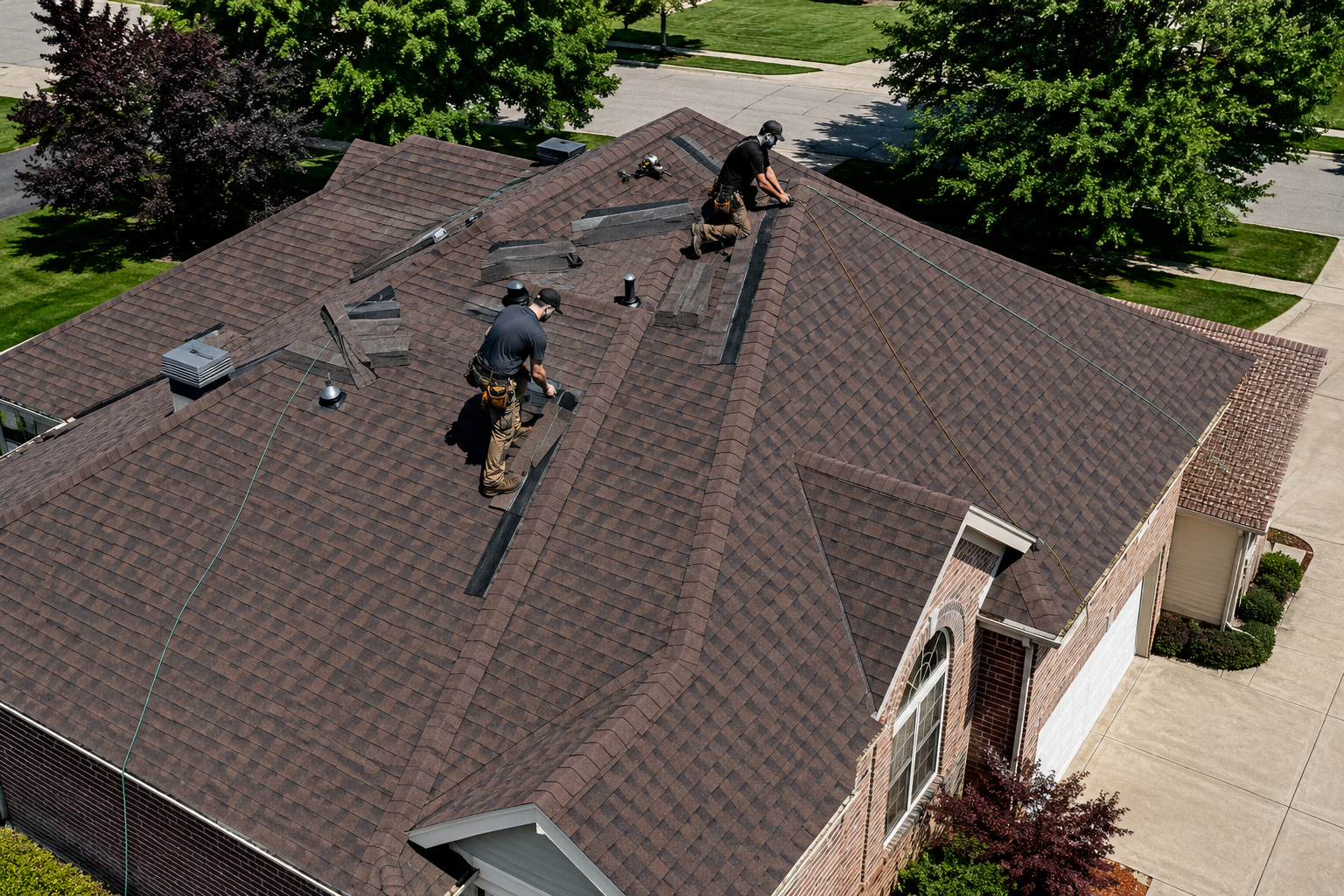
Key Takeaways:
- Orland Park’s fluctuating seasonal weather, including heavy snowfall and frequent thunderstorms, demands regular inspection of shingles and flashing to catch early signs of wear such as curling edges or missing granules, particularly after winter months.
- Gutters clogged with leaves and debris from mature oak and maple trees common in the area can lead to water pooling and ice dam formation, making biannual cleaning and downspout evaluation important for preserving roof lifespan.
- Signs of interior moisture, like dark stains on ceilings or damp insulation in the attic of a typical two-story Orland Park home, often point to underlying roof breaches that require immediate attention to prevent mold growth or structural deterioration.
External Shingle and Surface Assessment
Identifying Cracking, Curling, and Missing Granules
Shingles exposed to Orland Park’s freeze-thaw cycles often develop cracks along their edges or surfaces, especially after several winters. You may notice corners lifting or edges curling upward, which compromises the roof’s ability to shed water. Granule loss is common in older asphalt shingles and can be confirmed by checking gutters for dark sediment buildup. A roof with significant granule depletion typically shows bald spots where the underlying mat is visible.
Detecting Damaged or Corroded Metal Flashing
Flashing around chimneys, vents, and skylights is prone to rust and separation due to prolonged moisture exposure. You should inspect seams and joints for flaking paint, reddish-brown corrosion, or small holes in the metal. Loose or warped flashing allows water to penetrate beneath shingles, leading to leaks that may not appear immediately indoors. Even minor corrosion can expand during temperature shifts, worsening over time.
Aluminum or galvanized steel flashing on a mid-sized SaaS firm’s office building in downtown Orland Park was found to have split seams after five years due to improper installation and lack of sealant maintenance. Water had begun seeping into the wall sheathing, causing mold growth behind the exterior cladding. Regular inspection of flashing integrity, particularly after heavy snowmelt, helps prevent such hidden damage from escalating.
Gutter and Drainage System Functionality
Checking for Granule Accumulation and Debris
Over time, shingle granules wash into gutters, mixing with leaves and twigs to form dense blockages. You should inspect gutter channels after heavy rains, looking for standing water or overflow stains along the fascia. A mid-sized SaaS firm with a sloped roof in Orland Park found persistent clogs led to wood fascia damage within two seasons. Clearing debris quarterly prevents buildup that strains fasteners and promotes rot.
Ensuring Secure Attachment and Proper Downspout Flow
Gutter seams and hangers loosen from freeze-thaw cycles common in Orland Park winters. You must verify each fastener is tight and the system slopes correctly toward downspouts. Downspouts should extend at least four feet from the foundation, directing water away from basement walls. Misaligned sections often cause pooling near slab edges, increasing moisture infiltration risks.
Inspect the downspout discharge point during a rain event to confirm unobstructed flow. If water backs up or sprays from joints, sealant failure or internal rust may be present. Aluminum gutters with pin-and-cement seams often separate at corners without reinforcement. Installing splash blocks or extending drain lines improves grading efficiency, especially on flat lots common in older Orland Park subdivisions.
Interior Attic and Ceiling Diagnostics
Searching for Water Stains, Mold, or Mildew
Inspect ceiling drywall for yellowish or brownish discolorations, especially near joints or recessed lighting. These stains often signal recurring roof leaks that may worsen during Orland Park’s frequent freeze-thaw cycles. Water infiltration can compromise structural materials and promote mold colonies within 48 hours of exposure.
Check corners and behind stored items where airflow is limited. A musty odor or visible speckled growth on wooden rafters indicates active mildew. One homeowner in Orland Park discovered black mold near a chimney chase after persistent allergy symptoms, traced directly to a displaced flashing seal.
Evaluating Ventilation Efficiency and Insulation Health
Attic airflow prevents ice dam formation by maintaining a consistent roof temperature. Confirm soffit vents are unblocked and ridge vents are aligned. A mid-sized SaaS firm’s office building in the area reduced winter energy costs by sealing duct leaks and adding baffles to preserve rafter ventilation.
Inspect fiberglass or cellulose insulation for compression or moisture saturation. Flattened batts lose thermal resistance, while damp insulation fosters mold and wood rot. Ensure vapor barriers remain intact and properly oriented toward the conditioned space to minimize condensation risks.
Proper ventilation includes a balanced ratio of intake to exhaust, typically one square foot of net free area per 150 square feet of attic floor. Inadequate airflow traps warm, moist air, accelerating wood degradation and increasing shingle temperature by up to 20 degrees Fahrenheit over time.
Regional Environmental Factors for Orland Park
Orland Park’s climate subjects roofs to seasonal extremes, requiring homeowners to stay vigilant year-round. Frequent freeze-thaw cycles, high humidity, and severe weather increase wear on roofing materials. Local building codes reflect these demands, but proactive maintenance remains crucial.
- Monitor for hail impact scars on shingles after summer storms
- Inspect for lifted edges caused by strong southwest winds
- Check for moss growth in shaded areas due to prolonged moisture
- Examine flashing integrity after rapid temperature shifts
The suburban location near I-80 exposes homes to wind funneling effects from open terrain.
Assessing Damage from Illinois Hail and Wind Storms
Severe thunderstorms in northern Illinois often bring quarter-sized hail and gusts exceeding 60 mph, particularly in spring and early summer. These conditions can bruise asphalt shingles, crack tiles, and loosen underlayment. After a storm, look for granule accumulation in gutters or dented metal vents. A mid-sized SaaS firm near LaGrange Road reported roof repairs following a July 2023 derecho that peeled back ridge caps across multiple buildings.
The
Identifying Ice Dam Risks During Winter Freeze-Thaw Cycles
Repeated thawing and refreezing in Orland Park winters creates ice dams that block proper drainage. Warm attic air melts snow from below, which then refreezes at colder eaves. This cycle leads to water backing under shingles and leaking into soffits or walls. Homes on the east side of 87th Street with north-facing roofs show higher incidence due to reduced sun exposure.
Heat escaping through poorly sealed attic hatches or recessed lighting often fuels ice dam formation. Installing continuous soffit and ridge ventilation helps maintain a consistent roof temperature. The
Professional Evaluation and Safety Standards
A certified roofing inspector in Orland Park follows standardized protocols to assess both visible and hidden roof conditions. These evaluations go beyond surface-level observations, incorporating moisture detection tools and structural assessments that most homeowners cannot replicate. Licensed professionals also adhere to local building codes and OSHA safety requirements during inspections, minimizing liability and ensuring accuracy.
Insurance providers often require formal inspection reports from licensed contractors after storm events common in northern Illinois. A documented evaluation can support claims for wind or hail damage, especially when subtle signs like lifted shingle edges or granule loss are present. This documentation becomes part of your home’s maintenance record, potentially increasing resale appeal.
Essential Safety Equipment for Homeowner DIY Checks
Roof access requires proper footwear with slip-resistant soles to maintain footing on asphalt or wet surfaces. A sturdy extension ladder with standoff brackets helps prevent gutter damage and improves stability when ascending. Always wear gloves and eye protection to guard against debris or sharp metal flashing.
For two-story homes common in Orland Park subdivisions, consider using a drone for preliminary visual scans instead of physical access. A mid-sized SaaS firm recently reduced employee injury claims by 40% after implementing drone-based property assessments, illustrating their effectiveness. Hand tools like a moisture meter or flashlight aid in identifying soft spots or dark mold growth from leaks.
Indicators That Require a Licensed Roofing Contractor
Sagging rooflines or visible drooping along the ridge line suggest advanced structural compromise. This condition often stems from prolonged water intrusion weakening support beams, particularly after Orland Park’s heavy snow seasons. Only licensed roofers in Orland Park can safely diagnose and reinforce load-bearing components.
Multiple missing shingles after a thunderstorm, especially when accompanied by granules in gutters, signal urgent repair needs. A home on 143rd Street required full roof replacement in 2022 after wind damage exceeded local repair thresholds. Permits, proper underlayment installation, and code compliance are mandatory for such work.
Unexplained increases in energy bills coupled with inconsistent attic temperatures may point to compromised insulation due to roof leaks. A homeowner on Oak Forest Avenue discovered hidden water damage only after a thermal imaging scan by a licensed contractor revealed moisture trapped beneath sheathing. These professionals use diagnostic tools not available to the general public, ensuring accurate identification of underlying issues before they escalate.
Conclusion
Conducting regular roof inspections helps you catch minor issues before they become costly repairs. In Orland Park, where seasonal shifts bring heavy snow, strong winds, and frequent temperature swings, your roof faces unique stressors that demand attention. Look for missing shingles, granule loss, and sagging areas after winter, and ensure your gutters are clear before spring rains arrive. A mid-sized SaaS firm in the area reported resolving a persistent moisture issue by correcting improper attic ventilation, a problem first spotted during a routine interior check. Address concerns promptly, and schedule professional assessments every few years to maintain long-term integrity.
FAQ
Q: What should Orland Park homeowners check for during a spring roof inspection?
A: Spring inspections should focus on damage from winter weather, particularly ice dams and freeze-thaw cycles that commonly affect roofs in northern Illinois. Look for lifted or cracked shingles near eaves where ice buildup occurs, granule accumulation in gutters indicating shingle wear, and soft spots on the roof deck that suggest water infiltration. A mid-sized SaaS firm with an office in Orland Park reported resolving a persistent moisture issue after identifying a compromised valley seal during a post-winter check, underscoring seasonal vulnerabilities.
Q: How often should gutters be cleaned to prevent roof damage in Orland Park?
A: Gutters should be cleaned at least twice a year, ideally in late spring and again in late fall after leaf drop. Orland Park’s mature tree canopy, especially oak and maple species, contributes to heavy debris accumulation that can trap moisture against shingles and fascia boards. One homeowner on 143rd Street avoided soffit rot by installing gutter guards after repeated clogs led to water backing beneath the roof edge during spring rains.
Q: Can missing shingles always be replaced individually, or does it depend on the roof’s age?
A: Individual shingle replacement works best when the roof is relatively new and the surrounding shingles remain pliable. On roofs older than 15 years, matching new shingles to existing ones often fails due to fading and material brittleness, increasing the risk of cracking during installation. A contractor in Orland Park noted that homes built in the early 2000s frequently require section replacements rather than spot fixes because aging asphalt shingles lose flexibility and adhesion strength over time.
